Adaptive reuse projects is the process of taking old buildings or sites, and reusing them for a purpose other than it was designed.
When considering Adaptive reuse projects it’s important to understand if these investments make sense?

Competition is increasing for developable land within certain asset classes, not to mention with varying demographics and land use trends, opportunities to repurpose functionally obsolete and older properties is growing to be increasingly demanding.
Multiple developers are seeing the importance in redesigning outdated properties for largely different uses than originally made – for example, a retail space transformed into a multifamily/mixed use, a hotel to office, or possibly a school to co-working spaces.
Adaptive reuse is a completely new vision of an old space, not just simple remodeling. Therefore the variables have to adapt.
These projects timeline are normally shorter than ground-up projects which may create more value in an asset. A creative eye is extremely valuable which is advantageous to developers and investors. And then the pricing pressure lessens since obsolete or weak assets have less competition than easier value-add deals or entitled development.
Understanding all market conditions is crucial for Adaptive Reuse Projects. Such as land use and zoning, as-designed and proposed use, and macro trends in demographics.
Underutilized industrial buildings might be a good fit for work/live experiential mixed and retail use in high-demand urban areas.
These projects practicality has improved due to shifting market dynamics. Mainly in areas losing manufacturing, outdated and underutilized retail assets, and areas undergoing densification. A classic example being traditional malls and department stores bleeding because of the rise of e-commerce all the while creating opportunity and demand for industrial buildings of all types to discourse regional logistics, last-mile concerns, and distribution.
Determine the Possibility of Adaptive Reuse Projects
Analyzing the practicality of a property is crucial to determine the viability of all real estate investments. The feasibility process has to be more intensive for adaptive reuse because of the stand out difficulties of repurposing an existing property. Considerations like…
Demographics
Location: Analyze the accessibility and constructibility for the end game
Zoning: Whether general or specific plans govern uses and zoning of the property
Structure: Study the existing foundation and condition… electrical and plumbing, mechanical and life-safety
Community Needs: Stakeholders must consider if a community will buy into the project, namely, if support from local groups and community leaders will be a positive. Along with considering if the project will have backing from local planning commission, city council, or architectural review board.
Considering all of these factors will aid investors and developers in making thorough decisions.
Trip down Memory Lane
What we mean by this is to look back to learn from the past. Are there any unsolvable issues that were already faced. Are there boundary or easement challenges, historical preservation ordinances, or even legacy environmental issues?
Something to reminisce on for industrial properties… is there a free and clear use for construction and zoning approval? Industrial use challenges are more complex in regards to environmental remediation and these challenges affect both regional and national markets and local.
Thanks so much for reading! If you need consulting for Phase I Environmental Site Assessments, Phase II Subsurface Investigations, Property Condition Assessments, or any Commercial Real Estate transactions of any kind, feel free to ask for a quote today.

This week, the MBA Newslink published the Urban Land Institute…
http://uesconsulting.com/wp-content/uploads/2017/08/UES-Logo-c-750web.jpg00adminhttp://uesconsulting.com/wp-content/uploads/2017/08/UES-Logo-c-750web.jpgadmin2020-11-18 09:37:552020-11-18 18:39:58ULI Sets Forecast for a Potential 2021-2022 Rebound
First and foremost, what is the ADA?
It is the American Disabilities…
https://uesconsulting.com/wp-content/uploads/2019/08/joey-banks-YLIS2_rN938-unsplash.jpg30342427Mollie Beckhttp://uesconsulting.com/wp-content/uploads/2017/08/UES-Logo-c-750web.jpgMollie Beck2020-01-09 18:49:582020-02-09 18:51:00Advice on Avoiding Issues with the ADA

CREW KC and Creekmoor Golf Course have joined together for a great annual event. The course offers players a championship challenge while CREW KC allows its guests and members high quality networking. This combination gives each player an opportunity to form long lasting connections and improve their game on and off of the course.
UES is thankful to support CREW through this fantastic event and all proceeds go to CREW Network Foundation to positively affect the future of women in commercial real estate.
Golf attire is required! Collared shirts and no jeans. All participants must be at least 18 years of age.
SCHEDULE:
8:00 AM – Registration
Registration & hitting area open
9:00 AM – Shotgun start
Four-player scramble format
Commercial Real Estate has never been in a better spot but you have to ask the question, what’s coming next?
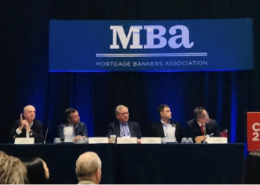
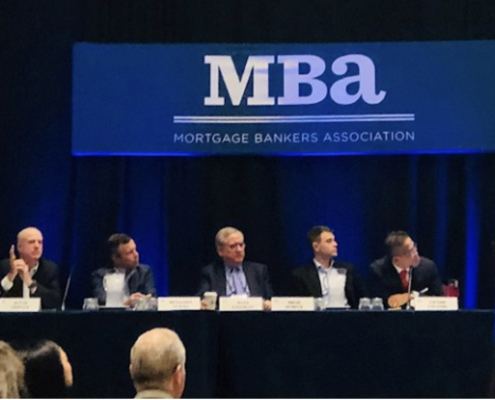
MBA Vice President of Commercial Real Estate Research Jamie Woodwell expressed his opinion for the sector at the MBA Commercial/Multifamily Servicing & Technology Conference.
“We’re currently in the longest economic expansion ever,” Woodwell said. “There have been a couple negative quarters here and there, but not two in a row, which is the definition of a recession. So there’s been an incredibly long run of economic expansion.“
Woodwell quoted multiple record-setting metrics: Commercial property cap rates are at record lows; MBA accounted a record $574 billion in multifamily and commercial mortgage bankers originations last year; plus loan delinquency rates are at or near record lows.
“So, there are a lot of phenomena going on, putting us in a place we’ve never seen before,” Woodwell said. “Thus, the question becomes what’s next?“
That answer is dependent on your outlook on life.
People on the optimistic spectrum may say they don’t see anything likely to change the current thriving situation. While others may say, “it’s been a great run, so I’m going to get ready for what comes next,” Woodwell said.
So let’s get into the details…
Woodwell used the first quarter’s 3.2% real GDP growth rate to back the current strength of the U.S. economy. Unemployment rate dropped to its lowest point in 50 years and job growth has averaged above 200,000 per month thus far in 2019. “That’s boosted wages, which economists had expected would happen well before now,” said Woodwell.
On the other end, our economies great performance could guide some inflation pressure. “But that has not yet materialized,” Woodwell said. “Some think trade tariffs could start to bring more inflation on.”
With this economic situation, each commercial property type has a unique story to tell…
Multifamily sector: Moving fast in terms of both supply and demand for apartments. The younger generation is filling the shoes of their parents, which supports high demand for multifamily properties. The main surge is in Millennials since they’re beginning to demand apartments and form households; mainly high-quality urban newly developed apartments.
Office sector: Shows a long steady run of positive job growth, but on the flip side, companies are using a smaller space per employee; which leads to the recent fairly stable market. Nevertheless, wage pressure increases while employers struggle to keep their top employees in the middle of an extended strong job market.
“One tool employers could use would be to reverse the recent trend of shrinking office space and increase the room given to employees in an effort to compete for talent,” he said.
Retail sector: Definitely has witnessed the largest changes, mostly due to E-commerce, which has taken over almost 10% of all retail sales and persists to grow 3 basis points each quarter.
“But consumer consumption is strong enough that both E-commerce and brick-and-mortar stores can grow–as long as consumer spending continues, Woodwell said. “But if consumer spending should slip, which will lose more?,” he asked.
Industrial Sector: Has experienced positive evolving changes that have rarely been seen in the past such as new warehouse properties with a second or third story. With manufacturing shipments and E-commerce growing at record highs, the industrial sector continues to thrive–and evolve.
In conclusion…
“When I think about what’s likely to happen, I come back to the idea of a plateau,” Woodwell said. “Coming off a record year of originations, I don’t see much pulling those numbers down, and I also don’t see much pushing those numbers much higher, so we generally see a plateau for originations for the next few years. If we continue to run at this level, that still means growth in mortgage debt outstanding because of maturities, and that means there will likely be more need for servicers like you to service these loans.”
Need help with any Commercial Real Estate transactions?
Even with the pandemic and the grim economic landscape of 2020,…
http://uesconsulting.com/wp-content/uploads/2017/08/UES-Logo-c-750web.jpg00adminhttp://uesconsulting.com/wp-content/uploads/2017/08/UES-Logo-c-750web.jpgadmin2021-01-18 20:34:112021-01-18 20:34:11Kansas City Development Landscape Still Booming!
https://uesconsulting.com/wp-content/uploads/2019/06/shutterstock_224250955-1.jpg39194927adminhttp://uesconsulting.com/wp-content/uploads/2017/08/UES-Logo-c-750web.jpgadmin2019-06-15 02:00:542019-07-30 18:56:39What’s Next with Commercial Real Estate?
Our Chief Marketing Director, Jamie Taylor, is a proud member of Commercial Real Estate Women (CREW) which is an industry networking organization. And according to a recent study published by CREW, women are advancing in commercial real estate, especially in the C-suite, and the shrinking salary gap. However, there are still areas for improvement to get more women intrigued in CRE brokerage, less of an income gap, and leasing and sales positions.
Here are 3 helpful pieces of advice to improve your professional career from respected female leaders in the Commercial Real Estate Industry.
“This type of progress comes with lessons learned early on. The first few years of a career can be pivotal to future success. Whether it is mastering the art of negotiation, relationship building, or finding your voice, these years can make or break any career. Three women shared what they learned that helped them reach the success they have today and make their lessons work for them.“
Advice given by Angele Robinson-Gaylord, President: IKEA Property, Inc.
As I began my career in commercial real estate, I had no idea how to build a career in this industry. I did not study real estate in college or law school, had no family or personal connections to the industry, and was a female in a field that is overwhelmingly male.
You have to be conversant in the language of real estate to do deals and build credibility.
You have to recognize that every relationship is valuable. Your path will cross those of your peers time and again.
When conducting transactions, you must be tough enough to get the deal done, yet you must learn to disagree agreeably to not gain a reputation as a deal killer.
You must persevere in the face of any obstacle or naysayer to reach your goals. In my case, it took 5 years to transition from practicing law to securing my first role on the business side of commercial real estate.
Finally, I learned that you can’t do it alone.
2. Find Your Voice
Advice by Robin Kennedy, Executive Vice President, Acquisitions & Development: Montage International
Early in my career, I was put on the spot in a senior level meeting. My opinion was different than many in the room, but I had a reasoned response. Granted, it was not the path that they chose, but that moment has had strong impact on me and served me well throughout my career.
Voicing my opinion was not always appropriate, as many times I wanted to learn from those with more experience.
But having this mindset has helped me to think about and become very practiced in how to make decisions.
It has helped me to take proactive ownership and move strategically forward.
At this point in my career, while the final decisions are often on my shoulders, I value those that can provide me with thoughtful opinions along the way.”
3. Trust Yourself
Lesley Horton Campbell, Associate General Counsel: Tiffany & Co.
Never be afraid to step up and trust that you are smart enough to handle a stretch assignment.
I made the mistake early on in my career of not stepping up for an assignment because I assumed that I was too junior and that naturally it would go to a more senior experienced colleague.
The next time the same opportunity came around, I quickly stepped up without hesitation and ended up knocking it out of the park.
If you are looking for a company to partner with on your commercial real estate transactions of any kind, we are here to alleviate the weight of environmental issues and minimize risks.
https://uesconsulting.com/wp-content/uploads/2019/04/inspiring-women-women-in-commercial-real-estate-CREW-women-leaders-Phase-I-Environmental-Site-Assessments-Phase-I-ESAs-Environmental-Consulting-women-in-CRE.jpg26664000adminhttp://uesconsulting.com/wp-content/uploads/2017/08/UES-Logo-c-750web.jpgadmin2019-04-10 22:23:332019-06-03 19:14:43Women who are Inspiring the Commercial Real Estate Industry
We may request cookies to be set on your device. We use cookies to let us know when you visit our websites, how you interact with us, to enrich your user experience, and to customize your relationship with our website.
Click on the different category headings to find out more. You can also change some of your preferences. Note that blocking some types of cookies may impact your experience on our websites and the services we are able to offer.
Essential Website Cookies
These cookies are strictly necessary to provide you with services available through our website and to use some of its features.
Because these cookies are strictly necessary to deliver the website, refusing them will have impact how our site functions. You always can block or delete cookies by changing your browser settings and force blocking all cookies on this website. But this will always prompt you to accept/refuse cookies when revisiting our site.
We fully respect if you want to refuse cookies but to avoid asking you again and again kindly allow us to store a cookie for that. You are free to opt out any time or opt in for other cookies to get a better experience. If you refuse cookies we will remove all set cookies in our domain.
We provide you with a list of stored cookies on your computer in our domain so you can check what we stored. Due to security reasons we are not able to show or modify cookies from other domains. You can check these in your browser security settings.
Google Analytics Cookies
These cookies collect information that is used either in aggregate form to help us understand how our website is being used or how effective our marketing campaigns are, or to help us customize our website and application for you in order to enhance your experience.
If you do not want that we track your visit to our site you can disable tracking in your browser here:
Other external services
We also use different external services like Google Webfonts, Google Maps, and external Video providers. Since these providers may collect personal data like your IP address we allow you to block them here. Please be aware that this might heavily reduce the functionality and appearance of our site. Changes will take effect once you reload the page.
Google Webfont Settings:
Google Map Settings:
Google reCaptcha Settings:
Vimeo and Youtube video embeds:
Other cookies
The following cookies are also needed - You can choose if you want to allow them: